
Rushabh Savla - 7 min read
ACL rehab is probably one of the most arduous journeys anyone can go through. It's not just the length of it . It's the pitfalls & the early mistakes that end up costing you months of rehab time, frustration & self-doubt.
I would know. I've torn both of my ACLs, LCL & Meniscus. Left one knee unoperated & one knee operated just over a year ago. I've sat on the sofa with a knee the size of a melon wondering if I'd ever trust it again. And beyond my own knees, I've helped over 300+ ACLers get back to what they love doing over the last few years: football, rugby, netball, skiing, running, chasing their kids around the garden.
Right now we have an active cohort of nearly 100+ ACL patients working with us. Here's the thing though: the majority of them didn't start with us. They came to us after rehab didn't work out somewhere else. Stuck at the same point for months. Told to "just keep going". Unsure if they'd ever get back to sport.
We aren't doing anything magical or groundbreaking. What we focus on is getting the world class basics right, every single time.
So if you're at the start of your ACL journey, or you're somewhere in the middle & feeling stuck, here are 5 things I'd want you to know.
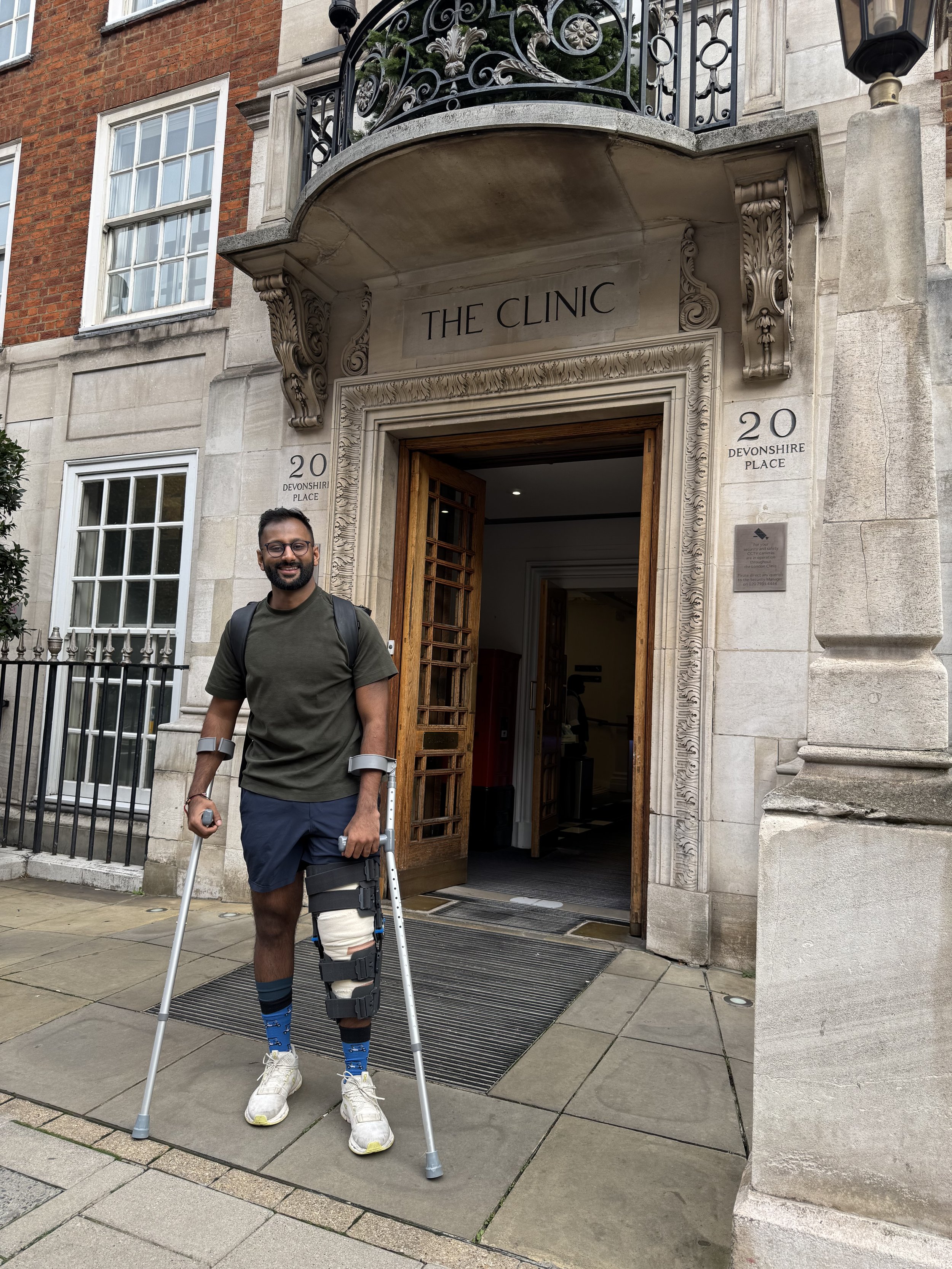
1. Expect a non-linear journey
If you're picturing ACL rehab as a straight line going up, I'm sorry to be the one to tell you: it isn't. Rehab goes up, down, sideways & sometimes completely topsy-turvy.
One week your knee feels brilliant & you're hitting new numbers in the gym. The next week it's swollen after a session that felt easy, or it's stiff for no obvious reason, or you've had a bad night's sleep & everything feels heavy. This is normal. In all the ACLers we've worked with, it's rare for someone to get through without hitting a few blips along the way.
What matters isn't avoiding the blips. It's how you & your team respond to them. A setback handled well might cost you a few days. A setback that's ignored, or panicked over, can cost you months.
And here's the honest bit: even when you know setbacks are coming, they can still get to you mentally. You can be fully prepared & still have a day where you feel like you're going backwards. That's ok. It doesn't mean you're failing, & it definitely doesn't mean your rehab isn't working. It means you're human, doing something really hard.
What to look for: a team that tells you up front that blips will happen, has a plan for when they do, & checks in on how you're doing mentally, not just physically.
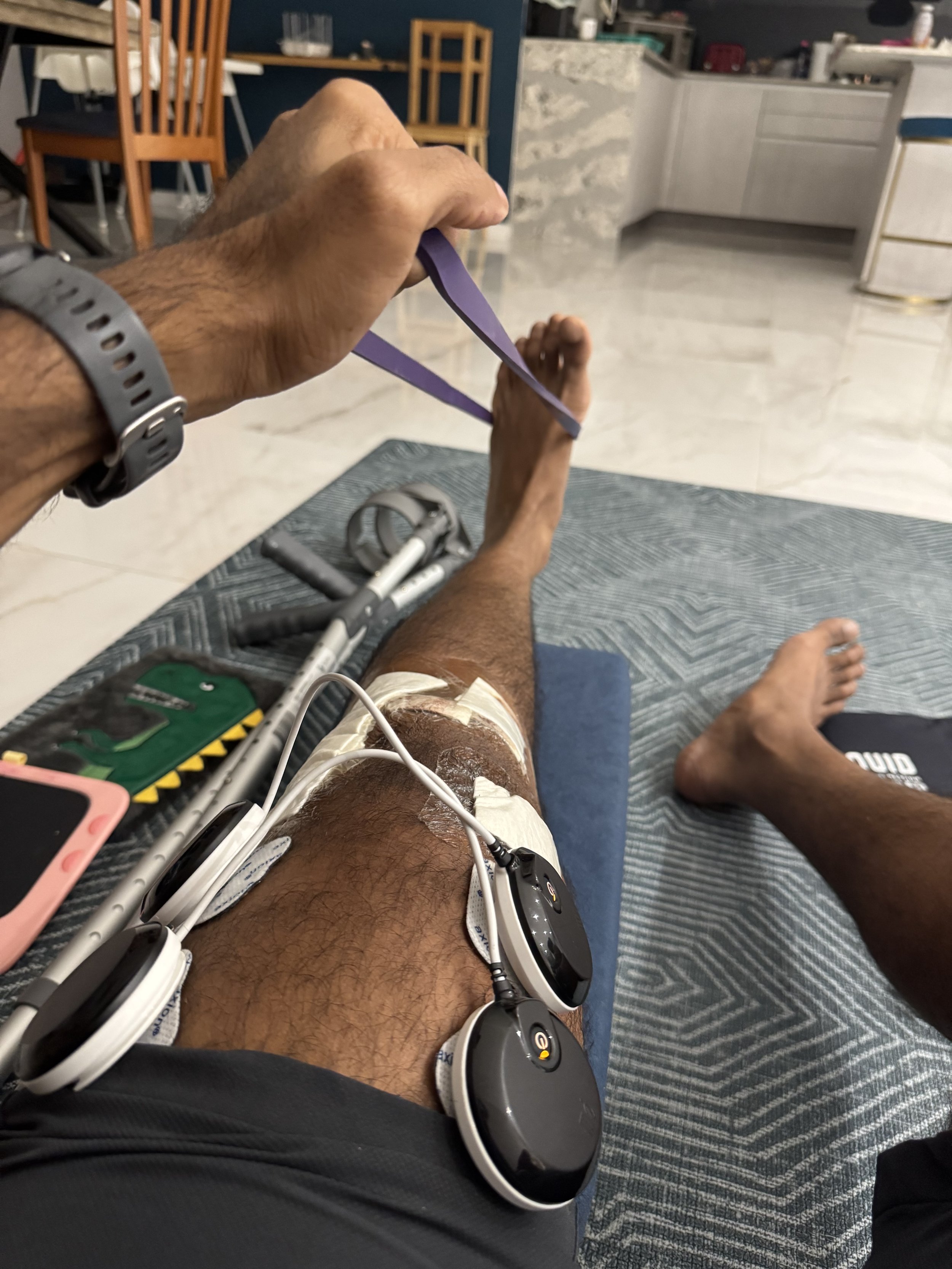
2. Rehab fatigue is real
There's a phenomenon in ACL rehab that almost never gets talked about or planned for: rehab fatigue.
Think about it. You're doing the same exercises, in the same gym, often on your own, three or four times a week, for the best part of a year. The early excitement of "right, let's smash this" wears off around month three or four. Progress feels slower. Motivation dips. Sessions get skipped. And that's usually right when the most important strength work needs to be happening.
This is exactly why we built the programming & group training at our ACL Collective the way we did.
Battling ACL rehab alone is tough. In a collective, things change:
You get inspired by others. Seeing someone a few months ahead of you hopping, sprinting or back on the pitch shows you what's possible.
You push yourself a bit more. It's amazing how much harder you'll work when the person next to you is grinding through the same set.
You feel safe. You're training alongside people in the same boat, who get the fear, the frustration & the small wins, without you having to explain any of it.
There's a real sense of camaraderie that builds over time. People turn up for each other. And when you turn up consistently, the results follow.
3. Pain is expected, & there's a guide for it
One of the biggest mistakes we see is people waiting until they're completely pain-free before they push on. Unfortunately, with ACLs (or any complex ligament injury, for that matter), that day rarely comes on its own. If you wait for zero pain, you can end up waiting a very long time, getting weaker while you do.
Some discomfort during rehab is normal & expected. The key is knowing which pain is ok to work through & which pain is telling you to back off. That's where our traffic light system comes in:
Green: mild discomfort (roughly 0 to 2 out of 10) that settles quickly after the session. Crack on.
Amber: moderate discomfort (around 3 to 5 out of 10) that's settled by the next morning. Fine to keep going, but we keep an eye on it & may tweak the load.
Red: sharper pain (6+ out of 10), or pain & swelling that's worse the next day. Time to pull back & adjust the plan with your physio.
This takes the guesswork & the fear out of training. Instead of every twinge feeling like a disaster, you've got a simple, clear way to judge how your knee is coping, & your team uses that feedback to progress you safely all the way back to sport.
4. You need direct access to your team
Your ACL team should be your physio, your S&C (strength & conditioning) coach & your surgeon, all on the same page & all reachable.
Here's some brutally honest talk. If you're waiting over a week or two to get a reply to a simple question, or waiting a month to see your physio just to get your programme progressed, you have chosen the wrong team.
ACL rehab moves in phases, & every phase has things that need checking, tweaking & progressing. When you can't get hold of anyone:
Small niggles turn into big problems because nobody caught them early.
You end up stuck on the same exercises for weeks, losing time you'll never get back.
You start second-guessing everything & your confidence takes a hit.
We see this far too often. Patients come to us saying their physio was simply unresponsive. And if we're being honest, a big part of that is often because the physio wasn't sure how to progress the rehab themselves. Silence can hide uncertainty.
What good looks like: a quick message when your knee swells up after a session, & a reply the same day. Regular check-ins. A physio & S&C coach who talk to each other, & to your surgeon when needed. You shouldn't ever feel like you're doing this on your own.
5. Data doesn't lie
ACL rehab has come a long way over the years. We now have the tools to actually measure how your knee & your leg are doing, rather than guessing.
So if your physio is only using hop tests, or simple tests that don't tell you much clinically, or is clearing you to return to sport purely because "it's been 9 months", that's a red flag. My first instinct is to say run! (Joking. Don't run. But definitely seek a second opinion.)
Time alone doesn't make a knee ready. Plenty of people hit the 9 month mark with a leg that's still nowhere near as strong as the other side, & that's when re-injuries happen.
One of the most important things we look at is RFD, or rate of force development. In plain English, it's not just how strong your leg is, but how quickly it can produce that strength. Think about landing from a jump, cutting to change direction, or stopping suddenly. Your knee has a split second to react. If your leg is strong but slow, it's not ready for sport.
To measure this properly, you need proper kit: VALD force plates (ForceDecks), dynamometers & other measurable tools that give real numbers, compare your injured side with your good side, & track your progress over time. No guesswork, no "it looks alright to me".
If your rehab has no access to any of this, you really need to ask yourself: how can I trust my rehab journey with no data?
Stuck? Let's have a chat
None of this is rocket science. It's the world class basics, done properly & consistently: expecting the ups & downs, not doing it alone, understanding your pain, having a team that actually answers, & using real data to make decisions.
If you're reading this & thinking "that sounds like my rehab" (stuck, unsure, waiting on replies, or just not confident your knee is getting where it needs to be), I'd love to hear from you.
Whether you're pre-op, a few weeks post-surgery, or a year in & still not back to sport, get in touch for a no-pressure chat about your ACL journey. We'll talk through where you are, what's been holding you back, & what the next steps could look like.
I've been there twice myself. You don't have to do this alone.