
Frozen Shoulder is Not a Condition to Wait Out…
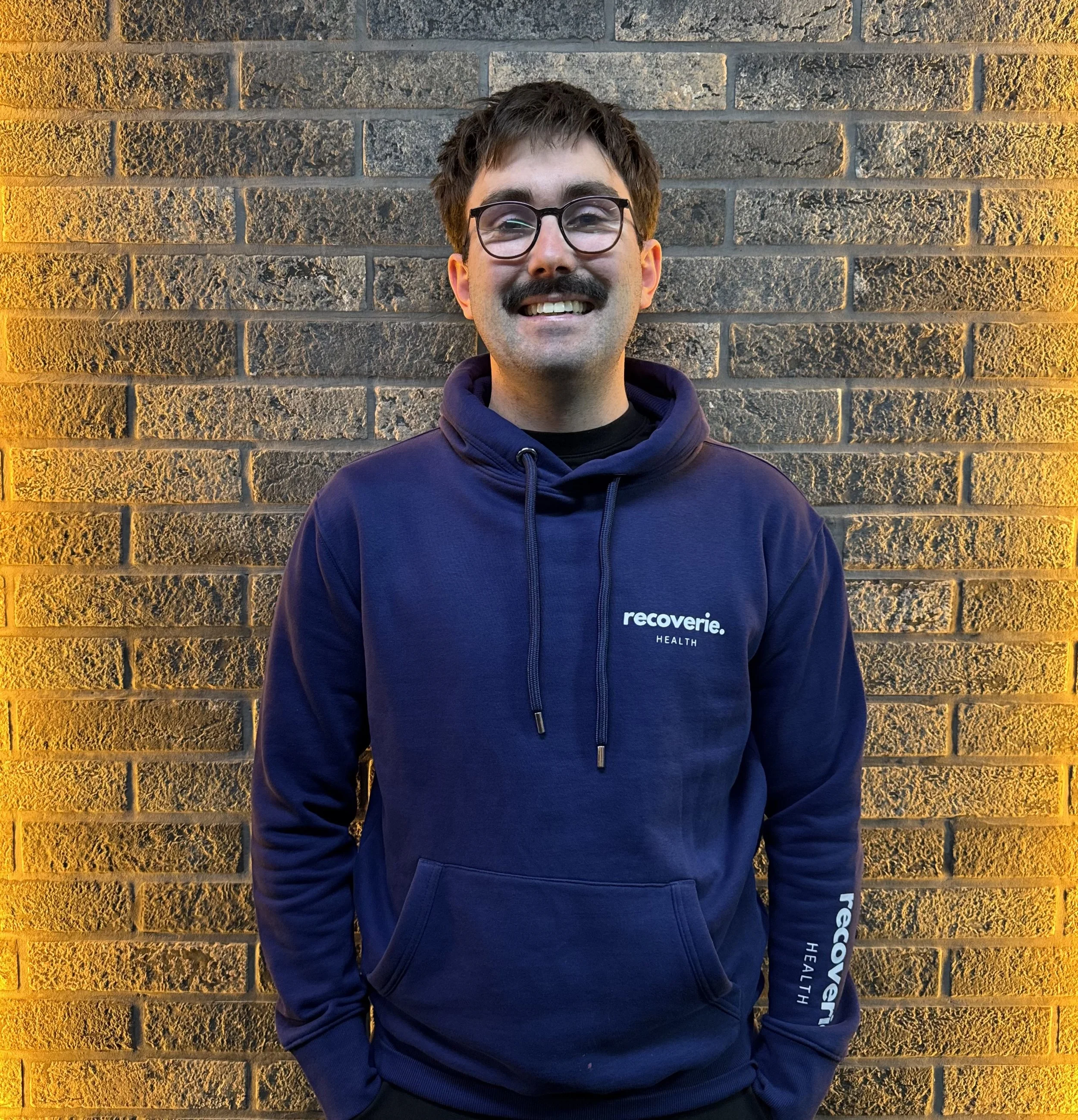
By Tom Atkins — Shoulder Senior Physiotherapist, Recoverie Health
5 MIN READ
I want to tell you about a group of people who changed how I think about frozen shoulder.
I was working on the Gold Coast in Australia. Running group exercise classes for Shoulder Pain patients. The group that kept showing up week after week wasn't who I expected. Mostly in their 50s and 60s. Many had been dealing with shoulder pain for months.
Some for over a year. Most had been told the same thing by different people: rest it, wait it out, it'll resolve on its own.
They were exhausted by that advice. Because it wasn't working.
I started doing talks after class. Sitting with them. Asking the right questions. What I found was that a significant number of them had frozen shoulder. And almost none of them had been told that's what it was.
That stayed with me.
Frozen shoulder, or adhesive capsulitis, is one of the most underdiagnosed and mismanaged conditions in musculoskeletal medicine. It affects roughly 2-5% of the population, with higher rates in women, people over 40, and those living with diabetes or thyroid conditions. And yet it gets routinely missed, mislabelled as rotator cuff pathology, and handed a prescription of rest and time that does very little to change where things are heading.
The reason it gets misdiagnosed so often comes down to how it presents. In its early stages, the freezing phase, it looks and feels like a lot of other shoulder problems.
Pain, stiffness, disturbed sleep. Clinicians who aren't specifically looking for the classic pattern of restricted passive range of motion in all planes, particularly external rotation, can easily attribute the symptoms to something else entirely.
By the time the correct diagnosis lands, the patient has often lost months. And in frozen shoulder, those months matter enormously.
I went on to work in a dedicated Shoulder Clinic alongside specialist shoulder surgeons. That experience changed everything. Sitting in that environment, working directly with surgeons who live and breathe this condition every day, sharpened how I understood it clinically and gave me a much clearer picture of where physio sits in the treatment pathway and why the timing of it matters so much.
When I made the move to the UK and joined the team at Recoverie.Health, I brought that with me.
The relationships, the approach, the conviction that frozen shoulder patients deserve better than "wait and see."
Early physiotherapy intervention is not just helpful. It is critical.
The freezing phase, before the joint capsule has fully contracted and the range of motion loss has become severe, is the window where we can genuinely alter the course of the condition. Targeted manual therapy, specific range of motion work, and education about what is happening inside the joint can slow the progression and reduce the severity and duration of the frozen phase significantly.
One of the interventions the evidence increasingly supports is hydrodilatation. A procedure where a mixture of saline, local anaesthetic, and corticosteroid is injected into the joint capsule under imaging guidance, stretching the contracted tissue.
Patients who combine hydrodilatation with structured physiotherapy consistently show faster restoration of range of motion and better functional outcomes than those who have either intervention alone.
The procedure creates a window. Physiotherapy fills it.
This is the joined-up approach I work on with surgical colleagues now alongside Mr. Peter Domos, Mr. Dimitrios Tsekes & many more. It's the model I saw work in the Shoulder Clinic. And it's what I'm building on at Recoverie.
Back to that group on the Gold Coast.
What struck me most wasn't the clinical picture. It was the isolation. People managing a painful, debilitating condition largely alone, armed with advice that wasn't helping and no real understanding of what was happening or why. When we started meeting regularly, talking through the condition, doing movement work as a group, something shifted.
They stopped feeling like patients waiting to get better. They became active participants in their own recovery.
Education is not a soft add-on to frozen shoulder rehabilitation. It is a core part of the treatment. When people understand the phases, the timeline, the rationale behind what they're doing, they engage differently. They progress faster.
My mission, working in London now, is to change the narrative around this condition.
Not something to be waited out. Not something to rest through. A condition that responds, genuinely responds, to the right intervention at the right time, from a team that understands it deeply.
If your shoulder has been painful and stiff for more than a few weeks, if you've been told to rest and wait and it isn't getting better, or if you've been given a diagnosis that doesn't quite fit, come in. Let's take a proper look.
Early is always better. Always.
Tom Atkins, Physiotherapist, Recoverie Health